Today, the Bhagavad Gita is recognized globally as the preeminent scripture of the Hindus. Many have approached this text from diverse perspectives, resulting in the numerous commentaries available to us today. However, the perspective presented...
Read More
https://www.shrikrupaprakashan.com/
Adhyatma and Life – 1
Shri Guru Pournima (July - 2025)
To make human life meaningful, fruitful, and truly rewarding, it must be examined through three facets. Charitartha (livelihood or means of sustenance), Sukha (happiness or well-being), Sukharupata (Ananda – absolute bliss) are these three facets. Each of these corresponds to a distinct form of Vidya (faculty of knowledge).
Adhyatma and Life (Part 2)
Newsletter (September - 2025)
When a person runs after the inspirations and fulfills them, what does a person actually gain? The answer is simple – Sukha (happiness)! The source of these impulses lies in the ananda (blissful) aspect of the true self (atmasvarupa). Thus, the pursuit of happiness is a natural tendency. It is an innate human inclination.
Adhyatma and Life (Part 3)
Newsletter (December - 2025)
Just as the science of spirituality (Adhyātma-śāstra) explains the doctrine of destiny (prārabdha), it also proclaims the path of karma yoga — the discipline of selfless action. It strongly upholds the value of earnest effort (prayatna-vāda). However, it does not confuse effort with destiny.
Adhyatma and Life (Part 4)
Newsletter (March - 2026)
Worship/Devotion: In the context of spirituality and life, the worship of God is a vital component. People all over the world worship God based on one concept or another. Even though the concepts and methods differ, their underlying principle—knowingly or unknowingly—remains the same. The first principle is that a human being is never perfect in all aspects.
Advaita Philosophy
Newsletter (December 2025)
When we observe life on Earth, we find that human beings are superior to all other living creatures. Their superiority is established through two extraordinary powers bestowed by the Supreme Lord:
Be the 21st Century Avadhūta!
Newsletter (December - 2025)
For the past fifteen years, we have been joyfully celebrating the Datta Jayanti Festival in America, and it fills our hearts with deep contentment. During the festival, we enter an entirely different realm. In this festival, we thoughtfully organize a variety of cultural, religious, and spiritual programs.
Dnyan, Dhyan and Moksha’s Obstacles
Newsletter (September - 2025)
The Divine assumes two roles: 1. Ishwar – the role that oversees the creation, sustenance, and dissolution of the universe. 2. Sadguru — the role that oversees the removal of Jiva’s ignorance (Adnyan). Offering a reverential remembrance to both these roles, let us, by their very grace, reflect upon an important spiritual subject.
Let the senses not wander
Newsletter (March - 2026)
Just as Ishwara manifested sense objects to allow for the unfolding of Prarabdha, He provided the senses as the essential instruments for their experience.
My Devotee Never Perishes
Newsletter (March - 2026)
We need to contemplate on the final line of the above verse: “na me bhaktaH pranashyati – My devotee never perishes.” In the Gita, the Lord gives many assurances to His devotees. This is one such aforementioned assurance, and for its fulfillment, a specific condition is laid out.
Sadguru P.P. Shrikrishna D. Deshmukh: Applied Paramartha
Newsletter (September - 2025)
These three are indeed rare and are attained only through the grace of God: a human life, a deep yearning for liberation (Mumukshutvam), and the guidance of a great, enlightened master (Mahapurusha). Wikipedia defines the branches of Science, Physics and Applied Physics, as follows: • Physics: Physics is a natural science that involves the study of matter and its motion through space and time, along with related concepts such as energy and force.
Science and Spirituality
Newsletter - Shri Guru Pournima (July - 2025)
Once upon a time, there was a prosperous kingdom. The king was extremely kind and just. All the people in his kingdom were like his own children. This king, the mightiest in the entire universe, was the epitome of six qualities: Dnyan (Spiritual Knowledge), Yashashree (Glory instilled with divine grace), Aishwarya (Unbounded Sovereignty), Sampatti (Abundance), Audarya (Magnanimity), and Vairagya (Detachment).
Shri Ganapati Atharvashirsha (Part 1)
Newsletter (December - 2025)
I worship that Vakratuṇḍa (the One with a curved trunk), whose temple oozes fragrant ichor, attracting swarms of bees, drawn by its scent; whose graceful trunk moves in majesty, the great protector of the world; whose shining tusks gleam with radiance, fierce in the destruction of calamities; the very embodiment of Śiva’s love.
Shri Ganapati Atharvashirsha (Part 2)
Newsletter (March - 2026)
Our previous edition marked the beginning of a contemplative journey into the Upanishadic depths of the ‘Shri Ganapati Atharvashirsha’. This issue brings you the second flower in that garland of reflections. Before we dive deeper into the actual meaning of the hymn, we must reflect on what our perspective towards it should be, and what meaning and conviction we should hold in our minds when reciting it.
Shri Hanuman Chalisa for the Present Generation (Part 2)
Newsletter (September - 2025)
In the previous episode, we explored the first two Dohas of the Sri Hanuman Chalisa. These Dohas taught us that the mind, like a mirror, must be kept pure and clear in order to truly reflect the greatness of Sri Hanuman Ji. Singing his praise brings the four fruits of life’s actions – Dharma, Artha, Kaam, and Moksha – into our lives.
Shri Hanuman Chalisa for the Present Generation (Part 3)
Newsletter (December - 2025)
In the previous episode #2, we discussed how meditating on Hanumān Ji’s qualities forms new thought and emotional patterns, reflected in neural changes. Repeating “Jñān Guna Sāgar” helps shift the mind from networks of fear to those supporting clarity, courage, and virtue. In this episode, we will discuss the second half of the first…
Shri Hanuman Chalisa for the Present Generation (Part 4)
Newsletter (March - 2026)
In the last two episodes, we learned that the Hanuman Chalisa chaupai “Jai Hanuman Jñan Guna Sagar, Jai Kapees Tihun Lok Ujaagar” encapsulates a layered doctrine, psychological, yogic, and neuro-spiritual, on the ideals and possibilities of the human mind-brain-spirit continuum. From Upanishadic Advaita and Sankhya Yog to classical and modern neuroscience, Hanuman ji emerges as the manifestation of brain-mind integration, neuroplastic transformation, and conscious evolution.
Spirituality and Science
Newsletter (December - 2025)
The words ātman and anātman are familiar to most people. Some of them are acquainted with their meanings. However, only a rare few among thousands truly know their profound essence and significance.
Sri Hanuman Chalisa for the present generation (1 of n)
Newsletter - Shri Guru Pournima (July - 2025)
Sri Hanuman Chalisa was written in the Avadhi language (a dialect of Hindi) by a great poet saint, Sri Tulsi Das ji, in the 16th century CE, in the city of Varanasi, Uttar Pradesh, Bharat. Hanuman Chalisa, as the name suggests, is written as 40 couplets called the Chaupai. It has two starting invocations Dohas.
Supplemental Statements from the Vedas
Newsletter (September - 2025)
The Vedas (Advait Vedant) constantly point towards the supreme reality. For Ishwar (Brahman) to manifest in one’s experience, one must continuously study and apply the teachings in the Vedas (Shruti). The goal of human life is to realize this supreme reality. And the definite means to achieve this goal is the study of the Shruti (the Vedas).
What Happens if One Does Not Pursue Parmarth?
Newsletter - Shri Guru Pournima (July - 2025)
1. The great saint Tukaram Maharaj says, “अहर्निशी सदा परमार्थ करावा । पाय न ठेवावा आडमार्गी ॥” “One must engage constantly, day and night, in the pursuit of Paramarth (the supreme pursuit). One must not set foot on the deviating path.” The “deviating path” here refers to Samsar (worldly entanglements). The meaning of this Ovi…
What is Vedanta?
Newsletter (March - 2026)
The Vedic literature is the supreme wealth of the people of India. Without contemplating the Vedas, an Indian cannot truly reflect on the nation, dharma, or culture. Our Indian tradition is rooted in the Vedic tradition.

Kathopanishad
Price: ₹80Total Pages: 150
Out of the 108 Upanishads, this work focuses on the ten principal ones. The nature of this volume is a metrical commentary composed in the traditional Marathi Ovi verse form, paired with a simple and...
Read More
Adhyatma Aani Jeevan
Price: ₹60Total Pages: 120
This volume is a collection of articles previously published in various spiritual journals. It primarily guides the Sadhaka on how to live and conduct oneself—illustrating how to make life a continuous Sadhana even while pursuing...
Read More

Atmaram (Vivaran)
Price: ₹40Total Pages: 92
This work is a commentary on Shri Samarth Ramdas’s crowning jewel, the Atmaram. The late Shri K.V. Belsare regarded the Atmaram as the very heart of Samarth’s wisdom. Within its five Samasas (chapters), the text...
Read More

Indian way of life
Price: ₹15Total Pages: 16
This is a concise yet profound English work on the subject of the four Purusharthas (the four aims of human life). Though modest in size, it is immense in its philosophical depth and significance.
Read More
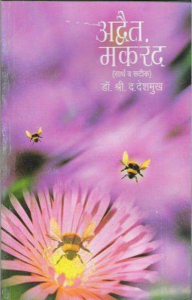
Advait Makarand
Price: ₹20Total Pages: 91
This work features a metrical translation in the Ovi form and a prose commentary on the twenty-eight verses composed by Shri Lakshmidhar Kavi. The text is designed to impart the core essence of Vedanta to...
Read More

Kenopanishad
Price: ₹40
Of the 108 Upanishads, this volume comprises a commentary on the ten principal ones (Dashopanishads). The nature of this work is a metrical commentary composed in the traditional Marathi Ovi verse form, paired with a...
Read More
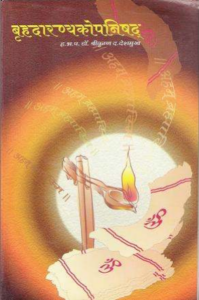
Bruhadaranyakopanishad
Price: ₹50
Of the 108 Upanishads, this volume comprises a commentary on the ten principal ones (Dashopanishads). The nature of this work is a metrical commentary composed in the traditional Marathi Ovi verse form, paired with a...
Read More

Ishavasyopanishad
Price: ₹20
Of the 108 Upanishads, this volume comprises a commentary on the ten principal ones (Dashopanishads). The nature of this work is a metrical commentary composed in the traditional Marathi Ovi verse form, paired with a...
Read More
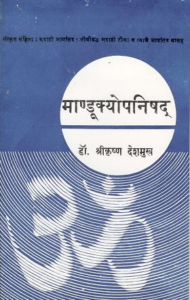
Mandukyopanishad
Price: ₹100
Of the 108 Upanishads, this volume comprises a commentary on the ten principal ones (Dashopanishads). The nature of this work is a metrical commentary composed in the traditional Marathi Ovi verse form, paired with a...
Read More

Of the 108 Upanishads, this volume comprises a commentary on the ten principal ones (Dashopanishads). The nature of this work is a metrical commentary composed in the traditional Marathi Ovi verse form, paired with a...
Read More
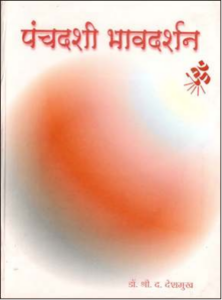
Panchadashi Bhavdarshan
Price: ₹350Total Pages: 766
This is a Sanskrit work on the science of Vedanta composed by Shri Vidyaranya and Shri Bharati Tirtha. In this volume, the Swamis have synthesized various Prakriyas (modes of analytical inquiry) found within the Upanishads,...
Read More
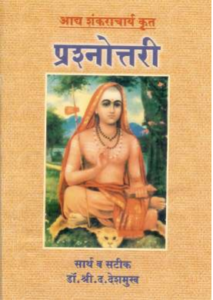
This is a comprehensive commentary on the introductory manual (Prakarana-grantha) written by Shri Adi Shankaracharya, presented in the form of a dialogue between a Guru and his disciple. The question-and-answer section from this work has...
Read More

Sadhak Sopan
Price: ₹80Total Pages: 216
This volume is a collection of articles previously published in various spiritual journals, alongside writings compiled by seekers from various discourses. For those who do not possess the capacity for the bird’s swift, soaring flight...
Read More
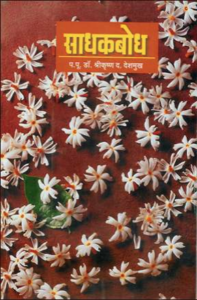
Sadhakbodh
Price: ₹60Total Pages: 142
This volume is a collection of articles originally published in various spiritual journals. It serves as a Bodha-Sanjivani (revitalizing nectar of wisdom) for seekers at every level, guiding them along the path of pure Paramartha....
Read More
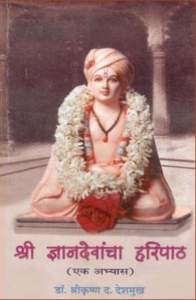
Shridnyandevancha Haripath (Ek Abhyas)
Price: ₹40Total Pages: 144
This work is a commentary on the Haripath, a scripture of profound renown and reverence within the Warkari Sampradaya. Included alongside it is a concise treatise by Dr. Deshmukh titled Sampradaya. This supplementary work provides...
Read More

Shrinarad-Bhaktisutre
Price: ₹30Total Pages: 112
This is a comprehensive, annotated commentary on the aphoristic Sutras composed by Sage Narada regarding the science of Bhakti. The work provides the original Sanskrit text alongside its deeper spiritual exposition.
Read More
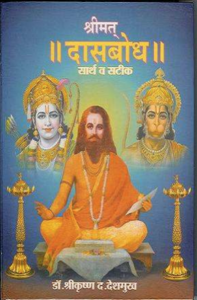
Shrimat Dasbodh – Sartha Va Satik
Price: ₹550Total Pages: 825
(Prasad Prakashan) — A clear and accessible explanation and commentary on the verses of the Shrimat Dasbodh. The work is structured such that each Ovi is followed immediately by its meaning, providing expanded clarification wherever...
Read More
Shrimukundraj Virachit Viveksindhu
Price: ₹350Total Pages: 342
(Prasad Prakashan) — An extraordinary work by the pioneer Marathi poet, Shri Mukundraj, detailing the methodologies (Prakriyas) of Vedanta and the corresponding path of Sadhana. This volume is an invaluable resource for both scholars and...
Read More

Dasbodh Chintanika
Price: ₹120Total Pages: 335
This volume does not contain the original verses or a complete translation of every Ovi in the Shrimat Dasbodh. Rather, it provides an exposition of difficult vocabulary and enigmatic verses (Koot Ovi), interpreted strictly in...
Read More
Aadyashankaracharyavirachit Stotravali
Price: ₹300Total Pages: 640
Marathi Annotated Translation (Two Volumes – Prasad Prakashan) — A comprehensive exposition of the hymns (Stotras) composed by Adi Shankaracharya. These works are steeped in the sublime nectar of Bhakti (devotion), Yoga (discipline), and Jnana...
Read More

Sukhacha Shodh
Price: ₹70Total Pages: 148
This volume is a collection of thirteen articles originally published in the quarterly journal Bhakti-Yoga. Every article in this collection is worthy of attentive reading and deep contemplation. The work is graced with a preface...
Read More
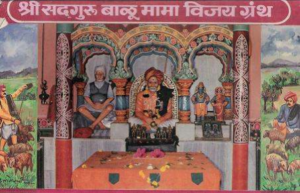
Total Pages: 60
This is the sacred metrical biography (Charitra-pothi) of the renowned mystic saint, Balumama Dhangar, from the village of Adampur near Murgud. Devotees of Saint Balumama cherish this text for sacred recitation (Parayana). Through his blessings,...
Read More
Shrieknathi Haripath – Bhavdarshan
Price: ₹40Total Pages: 55
After the Haripath of Shri Dnyaneshwar, the Haripath composed by Shri Eknath Maharaj is the most widely cherished within the Warkari Sampradaya. This commentary provides a detailed exposition and meaning for the twenty-five Abhangs that...
Read More

Taittiriya Upanishad
Price: ₹50Total Pages: 89
Among the ten principal Upanishads, the Taittiriya Upanishad belongs to the Taittiriya branch of the Krishna Yajurveda. It is comprised of the seventh, eighth, and ninth chapters of the Taittiriya Samhita, traditionally referred to as...
Read More

Ishavasyopanishad
Price: ₹20Total Pages: 27
The ultimate principle of the universe is Brahman. Because this Supreme Reality (Paramatmatattva) is Nirguna (without attributes), Nirakara (formless), and Nirvishesha (undifferentiated), it alone is the Absolute Truth. One who lacks an inclination toward the...
Read More
Jeevan Sundar Aahe
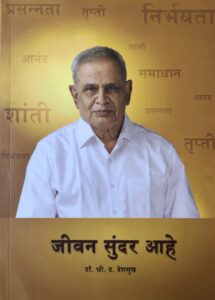
Price: ₹50Total Pages: 77
This collection comprises poems composed by Parama Pujya Kaka over the last ten years, mostly without prior planning, along with a few earlier works. In these verses, the emphasis is placed on lyricism and musicality...
Read More
Paramartha Vidnyan
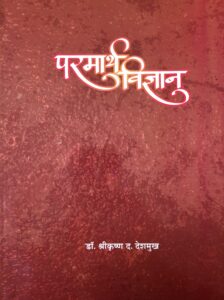
Price: ₹80Total Pages: 144
Those newly entering the domain of Paramartha often find its foundational concepts unfamiliar. While numerous scholarly works explain these ideas, the heavy use of formal Shastric terminology can often feel daunting to the reader. In...
Read More
Aparokshanubhuti Bhavdarshan
Price: ₹40Total Pages: 62
While the underlying thread of all Adi Shankaracharya’s works remains consistent, each composition offers a unique perspective. Studying these works reveals new nuances, distinct approaches, and varying points of emphasis that provide a deeply enriching...
Read More
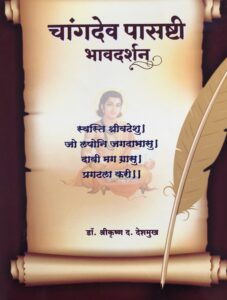
Changdev Pasashti Bhavdarshan
Price: ₹40Total Pages: 60
The Changdev Pasashti, composed by Sant Shri Jnaneshwar, is a work modest in length but immense in philosophical stature. Comprising sixty-five Ovis, it was addressed by Jnandeva to the renowned Yogi, Changdev Maharaj. Having preserved...
Read More
Bruhadaranyakasambandhabhashyavartik Bhavdarshan
Price: ₹350Total Pages: 372
In his commentary on the Brihadaranyaka Upanishad, Bhagavan Shankaracharya composed a foundational introductory commentary (Arambha-bhashya). His eminent disciple, Shri Sureshwaracharya, subsequently authored a Vartika (explanatory verse commentary) which received the Acharya’s highest commendation. This Vartika...
Read More
Naishkarmyasiddhi Bhavdarshan
Price: ₹150Total Pages: 185
In the Naishkarmya-Siddhi, a seminal work by Shri Sureshwaracharya that expounds the philosophy of Kevala-Advaita (Absolute Non-dualism), one finds a rigorous intellectual debate of refutation and establishment (Khandan-Mandan). In this endeavor, the author wields the...
Read More
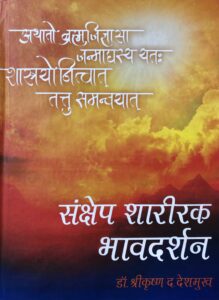
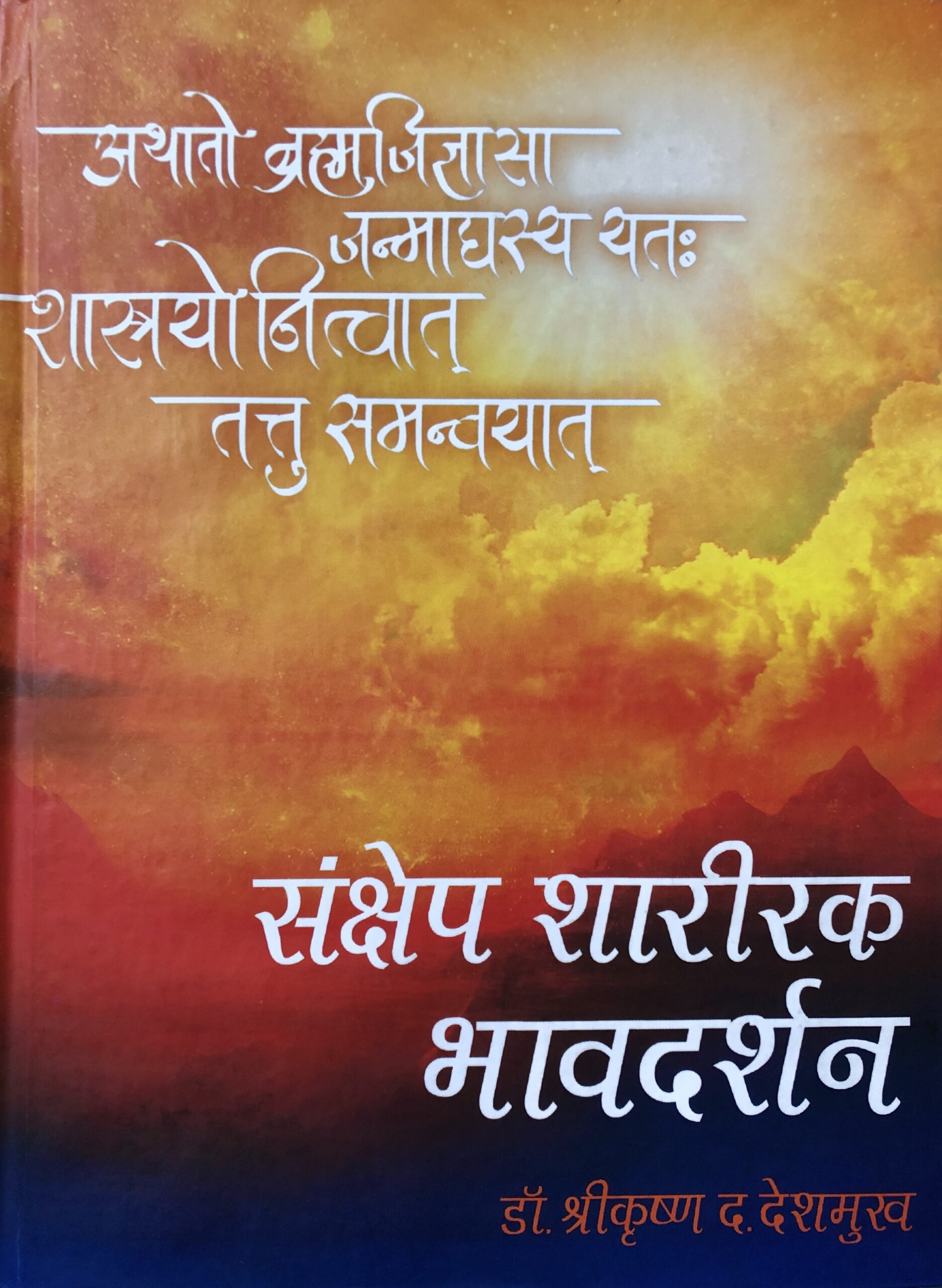
Sankshep Sharirak Bhavdarshan
Price: ₹200Total Pages: 384
Within the systems of Indian philosophy, Vedanta holds the supreme position. Those who established this science upon a firm foundation were primarily proponents of the Kevala-Advaita school of Shankara. The term Shariraka refers to the...
Read More

This book does not provide the complete original text or word-for-word meanings of all the verses (ovyas) from the Shrimat Dasbodh. Instead, it offers a detailed commentary on the difficult words and complex verses of the Dasbodh, strictly aligned with...
An audio recording of this book is available. If you wish to listen to it, please click the ♬ icon provided on the side.
Tell Me, O Wave
O wave, speak up and tell me clear,
Are you yourself, or Water's own my dear?

Recall, by winds you were blown,
Named as 'wave', apart from Water, shown,
That name you kept as if your own;
Awaken now! And leave this false veneer!

By the Moon’s deep pull upon the Ocean's chest,
As the Sea's own jewel you are manifest,
To merge back into That - your only quest;
A radiant crest that crowns the Ocean floor!

When cupping hands to catch you in the end,
'Twas only Water they could apprehend,
Forget "I'm a wave" a fleeting claim;
Just sing "I am the Water"—one and the same!

A pattern of water, on water spun,
Gleaming with rare beauty under the sun.
Now dwell without worry in playful peace;
To perfect Bliss, your true nature, now adhere!
Guruvandana – At the Feet of the Holy Guru
I bow at these feet, O Shreeguru divine,
Accepting me, you revealed your abode as mine. ǁ Refrain ǁ

Stanza 1: (The Illusion of Senses)
Many births in ignorance, no awareness of form,
Only singing of worldly things was my norm,
Lost in the praise of pleasures day and night,
Such was my nature, far from any light. ǁ 1 ǁ

Stanza 2: (The Divine Intervention )
Though tightly bound in bondage past,
My accumulated pure merit at last,
Made your grace pierce through me fast—
Leaving no room to run away. ǁ 2 ǁ

Stanza 3: (From Delusion to Peace)
Vedanta at your will, beholds your peace divine,
Where absolute serenity and bliss eternally shine,
Wandering delusional, out of alignment and line,
Your vessel carried me through the night to the day. ǁ 3 ǁ

Stanza 4: ("I am That")
Obsessed with "I am Brahman" alone,
Drunk in bliss where no ego was shown,
Now even that subtle scent has flown—
No companion stays, no standing place. ǁ 4 ǁ

Stanza 5: (Pure Being)
What IS simply exists in pure rest,
No movement or path to be guessed,
Savoring the cream, eternally blessed—
I am the Sovereign of creation. ǁ 5 ǁ
O Night Queen
Stanza 1: The Caution against Madness
O Night Queen, O Night Queen, don't lose your mind,
Don't act so crazy before all mankind,
Leave your mad, wild frenzy behind
Must you really act this way? ǁ 1 ǁ

Stanza 2: The Evanescent Fragrance
O Night Queen, O Night Queen, no braid will hold your bloom,
Your fragrance leaves the courtyard in sudden gloom,
Fading away in a moment to its doom
Does nothing remain in the very next second? ǁ 2 ǁ

Stanza 3: Devotion to the Divine
O Night Queen, O Night Queen, the Jasmine is your companion near,
She rests at Lord Shiva’s feet in devotion sincere,
Why do you stay so far away in fear
Distant from the Divine Lord? ǁ 3 ǁ

Stanza 4: The Lotus and the Sun
O Night Queen, O Night Queen, look at the lotus in the lake,
When the Sun God rises, her petals awake,
Blooming in glory for the morning's sake
Opening fully to the light of day. ǁ 4 ǁ

Stanza 5: Solitary Revelry
O Night Queen, O Night Queen, wild in the woods you roam,
Dancing alone far away from any home,
No one steps forward across the forest foam
Eager to reach out and hold your hand. ǁ 5 ǁ

Stanza 6: The Gift of the Earth
O Night Queen, O Night Queen, the Earth gave you fragrance as a sign,
Her very own essence she bestows on your line,
Yet you pay no mind to what is truly thine
Treating Her rich scent as solely your own. ǁ 6 ǁ

Stanza 7: The Eternal Mine
O Night Queen, O Night Queen, this Earth is a treasure-mine of grace,
Wrought by the Almighty’s hand in time and space,
Since time immemorial, an eternal place
Formed by the divine Creator’s deed. ǁ 7 ǁ

Stanza 8: Songs of Devotional Yearning
O Night Queen, O Night Queen, let us sing the Lord’s song,
Calling these longing devotional hymns our own before long,
Even if the world calls us foolish and wrong
You and I shall sing them now. ǁ 8 ǁ

Stanza 9: Non-Dual Realization
O Night Queen, O Night Queen, at this new turn of life's way,
Engrossed in the illusion where 'I' and 'You' play,
All sense of duality has dissolved away
Neither 'I' nor 'You' remains anymore. ǁ 9 ǁ
The Joyful Mind
My mind laughs and dances free,
My mind dances and laughs with glee. ǁ Refrain ǁ

Stanza 1: (The Play of Nature)
Before me spreads this forest fair,
Trees in full bloom beyond all compare,
A laughing stream shines through the air—
As flowing waters rush along their path. ǁ 1 ǁ

Stanza 2: (The Unchanging Witness)
High towering cliffs stand all around,
Like guardians of this sacred ground,
Emotionless, solemn, and profoundly bound—
Beyond the reach of human sight. ǁ 2 ǁ

Stanza 3: (Nature’s Living Poem)
Sweet bird-chirp fills the surrounding air,
A trickling brook flows beside right there,
Leafy rustles whisper soft and fair—
And poetry takes a living form. ǁ 3 ǁ

Stanza 4: (Awakening)
That poetry made all feelings fade,
Even the thought of fading dissolved and stayed,
For a fleeting moment, no trace was made—
Until awareness gently woke. ǁ 4 ǁ
Song of Joy
Like water on a lotus leaf, life slips so soon away,
Yet in this fleeting life, sing songs of joy each day.ǁ Refrain ǁ

Stanza 1: Right Action & Compassion
Perform the deeds that please the Lord above,
Shun those actions that your soul cannot approve,
Keep aversion to the ego's selfish move
Let tears well in your eyes at another's pain. ǁ 1 ǁ.

Stanza 2: The Path of Devotion
Store the Lord forever in your heart within,
Then behold Him everywhere in the world's din,
Let your tongue chant His name through thick and thin
Live to that rhythm, whether anyone stays or leaves. ǁ 2 ǁ

Stanza 3: The Path of Wisdom
Hold the Guru’s teaching deeply in your soul,
Let the So’ham breath elevate you to the whole,
See the entire world unified without a division in its goal
Let your inner heart forever crave that non-dual vision. ǁ 3 ǁ

Stanza 4: Liberation
To this earthly body, there is no return to claim,
Who speaks of birth and death knows not the secret flame,
They miss the eternal Truth and wander without an aim—
"The Truth is natural," the ancient saints reassure. ǁ 4 ǁ
We Are Hindu
Stanza 1: (Universal Respect)
We are Hindus, proud and true,
Paying our deities reverence due,
Never scorning another's view
In a single word we say. ǁ 1 ǁ

Stanza 2: (The Sun of Faith)
We see the Lord in stone and clay,
Millions of forms we praise today,
Faith alone is the bright sunray—
Illuminating all that is. ǁ 2 ǁ

Stanza 3: (Unshakable Devotion)
Even if that stone should break,
Our inner faith no shock can shake,
With pure devotion we shall make
And raise another in its place. ǁ 3 ǁ

Stanza 4: (Restraining Unrighteousness)
Dushasana and Ravan's greed,
Kansa and Duryodhan's deed,
And Karna who backed their evil seed
All such forces we shall restrain. ǁ 4 ǁ

Stanza 5: Virtuous Champions
We bear no malice toward a foe,
By virtue's side we always go,
With head held high in gratitude's glow
We carry honor on our crown. ǁ 5 ǁ

Stanza 6: Reverence for Nature and Nobility
One festival for the serpent's grace,
One for Spring's bright bloom we trace,
One for the strong Pandava race
Honoring those of noble trait. ǁ 6 ǁ

Stanza 7: Modern Growth, Ancient Roots
New prosperity we shall embrace,
A glowing future we shall trace,
Yet from our roots we won't erase
The foundation we hold so firm. ǁ 7 ǁ

Stanza 8: Dharma and Equality
Dharma is our very breath,
In truth and justice we keep faith,
Equality's core is our true path
Deeply known within our hearts. ǁ 8 ǁ

Stanza 9: Women Warriors and Scholars
Our women fight as warriors bold,
Treasures of arts and skills untold,
Reciting Vedas from days of old
Unbound in the royal court. ǁ 9 ǁ

Stanza 10: Universal Brotherhood
This sacred soil our Motherland we call,
Living as Her children one and all,
Brotherhood unites us beyond any wall
With anyone who comes our way. ǁ 10 ǁ

Stanza 11: Protecting the Land
We shall not let this land divide,
Against the oppressor we stand side by side,
Pledging our lives with righteous pride
Victory shall be ours at last. ǁ 11 ǁ
The Cymbals Ring
Jhan jhan jhan jhan, the cymbals resound,
Jhan jhan jhan, the cymbals resound!
In Hari's shrine, the rhythm is found. ǁ Refrain ǁ

Stanza 1: The Devotion to Form
For Vitthal, deep devotion blooms inside,
Rama’s Hanuman sways with joyous pride,
Shiva’s third eye opens clear and wide
The flute of the Manifest begins to play. ǁ 1 ǁ

Stanza 2: The Voices of the Saints
Dnyaneshwar’s sacred discourse comes alive,
Through Tukaram’s songs, pure truths survive,
Janabai speaks of Namdev to revive
Ramdas completely fills the inner heart. ǁ 2 ǁ

Stanza 3: The Ultimate Union
The mortal and Supreme unite,
The worldly illusion fades from sight.
The treasure of pure bliss is found,
Swaying within the heart's vast ground. ǁ 3 ǁ