Vedant Bhaskar / Work
Dr. S. D. Deshmukh - Person and Mission
जो जनांमध्ये वागे । परी जनावेगळी गोष्टी सांगे । ज्याचे अंतरीं ज्ञान जागे । तोची साधू ॥
A true saint is one who lives among people but speaks of higher spiritual truths, in whose heart the light of true Knowledge is ever awake. (Dasbodh 6.1.18)
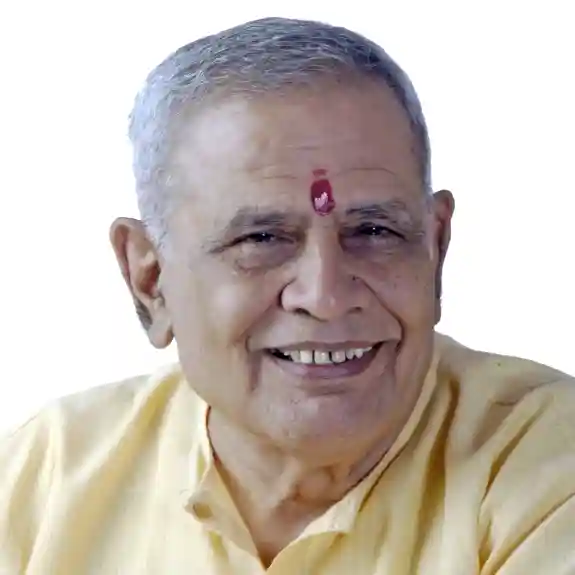
Dr. Shrikrishna Dattatraya Deshmukh, fondly known as Doctor Kaka, is the living embodiment of this verse. Through his very presence, we are granted the rare privilege of witnessing a profoundly exalted, living liberated sage (Jivanmukta), even in these present times. It is our joy to share a brief glimpse into his life and his extraordinary mission.
A householder (Grihastha) by stage of life, a detached witness (Vanaprasthi) in his conduct, and a complete renunciate (Sannyasi) in his inner disposition. The divine qualities of an ideal spiritual being (Uttam Purusha) described by Samarth Ramdas in the Sadvidyanirupan shine brilliantly within him. For example:
भाविक सात्विक प्रेमळ । शांती क्षमा दयाशीळ । लीन तत्पर केवळ । अमृतवचनी ॥
Devout, pure, and loving; filled with peace, forgiveness, and compassion; deeply humble, ever-attentive, and speaking words as sweet as nectar. (Dasbodh 2.8.3)
In that same chapter, Samarth mentions that certain great qualities rarely coexist within the same person. Yet, astonishingly, these virtues reside together in perfect harmony within Param Pujya Dr. Deshmukh. He is a master of supreme knowledge, yet a humble devotee; a towering intellectual, yet completely unattached; a man of intense spiritual austerities, yet profoundly calm; an eloquent speaker who does not chase wealth; all-knowing, yet always ready to hear the opinions of others; supremely elevated, yet grounded in true humility.
Inwardly drawn, of measured speech, and holding the Supreme Truth (Paramartha) as his sole life commitment, Most Revered (Param Pujya) Sri Guru Doctor Kaka teaches the core secrets of spiritual practice from the Upanishads, such as:
यदेव विद्यया करोती श्रद्धयोपनिषदा तदेव वीर्यवत्तरं भवतीती
‘Whatever is performed with deep knowledge, faith, and meditative focus becomes profoundly powerful.’ (Chandogya Upanishad 1.1.10)

His outward appearance is tall, majestic, and radiantly joyful, while his inner self is adorned with affinity, courtesy, compassion, and a beautiful flexibility. Catching sight of him draws people in, and his presence offers an experience of absolute tranquility. In him, the ideal Sattvic Satpurush (pure and enlightened being) envisioned by Samarth Ramadas and Sant Dnyaneshwar manifests in the modern world. The reason Dnyanadev composed the beautiful prayer “चंद्रमे जे अलांच्छन । मार्तंड जे तापहीन । ते सर्वांही सदा सज्जन । सोयरे होतू ॥ meaning – ‘May saints, who are as soothing as a spotless moon and as bright as a heatless sun, be close companions to all’—becomes entirely clear when one witnesses the effortless grace of Doctor Kaka’s daily life.
Social awakening is undeniably necessary. If one desires the upliftment of society or the individual, appropriate guidance must be provided for the purification of the minds of both. Then, gradually, vices are discarded. Inner detachment dawns, and people turn to the righteous path. Since society is composed of individuals, the society itself transforms. Even in the spiritual realm, bound souls become seekers of liberation, seekers become practitioners, practitioners become perfected beings, and perfected beings evolve into revered saints. They just need to meet a Guru who enlightens them with authority and guides them with love. This noble work is done only by a saint who has liberated himself through systematic scriptural study and who has a deep inner yearning to hold the hands of worshippers and lead them to salvation. Presently, among such respected and venerable sages, the name of Dr. Shrikrishna Deshmukh must be specially mentioned“!.”
By profession, he is a medical doctor. He practiced for many years in the village of ‘Murgud,’ situated on the banks of the Vedaganga river in the Kolhapur district. Alongside his professional excellence, he was renowned across a fifty-kilometer radius as an extremely compassionate, unattached to worldly gains, pure, and god-like human being. While rendering medical service, he never adhered to the boundaries of time, nor did he ever refuse to visit a patient’s home for an examination. He considered it his absolute duty to reach the patient by any available vehicle or even by walking. He never harassed anyone for the sake of money. On numerous occasions, he gave money from his own pocket to impoverished patients to purchase medicines and food. He embodied the famous teaching of Samarth Ramadas in his own life: उत्तम गुण तितुके घ्यावे । घेवून जनास शिकवावे (‘Absorb every drop of goodness you see in the world, and use it to uplift the people’). The Government of Maharashtra honored him with an award for his professional work and skill, with a special emphasis on his family planning initiatives.
Besides his profession, he undertook many other initiatives in the village. He tried to eradicate incorrect and harmful beliefs in society regarding spirit possession, black magic, etc. To counter this, he practically demonstrated the groundlessness of these fears by openly preparing and consuming juice from lemons cast onto the streets during superstitious rituals, and by deliberately stepping on ritualistically discarded chilies. The deeply rooted myth that ‘even touching such objects brings affliction’ was perfectly countered by his direct actions. While preserving our culture, he seamlessly embraced appropriate modernity. Recognizing the social need and as a spiritual service, he took the initiative to build a Vitthal temple in the village. At the time, Murgud lacked a kindergarten. Understanding the importance of value-based early education, he collaborated with two like-minded colleagues and established three kindergartens. He supported the education of impoverished students regardless of their caste, and even funded one young man’s studies all the way through medical school.
Because of his profoundly compassionate nature, he attained an unwavering place in the hearts of the people as ‘a divine soul, a saint.’ His wife, Mrs. Vasundhara Deshmukh (Kaku), is equally energetic, cheerful, and kind-hearted. Being the life partner of such an exalted individual is no easy task, yet Mrs. Kaku has managed this vital role with exceptional competence and genuine joy.
Along with the professional and social service he was rendering selflessly, P.P. Dr. Deshmukh regularly continued reading, contemplating, and meditating on spiritual texts. Because he had a huge professional workload, he reduced his sleeping and resting hours during that period to get time for his studies. As a direct result of this dedicated Karma Yoga and constant studying, the deep knowledge of the Upanishads was translated through him into the Marathi ‘Ovi’ poetic format. While still actively running his clinic, he wrote poetic commentaries on the ten primary Upanishads as well as numerous articles focused on spirituality. During this exact time frame, he initially conducted lecture tours in three neighboring talukas and eventually began traveling to multiple locations within Maharashtra. Around 1975, on the occasion of seeking a preface for his critique on the Ishavasyopanishad, Dr. Deshmukh encountered the guiding light of the Varkari tradition, P.P. Shri Shankar Maharaj Khandarkar, and achieved the grace of spiritual initiation. Later, in 1981, Dr. Deshmukh received the divine command to expand the tradition and impart spiritual initiation (Anugraha) to others. However, he formally began bestowing this initiation around 1987-1988. Having embraced the Varkari tradition, many people flocked to him for the ritual of ‘wearing the Tulsi mala’ (sacred beads), in accordance with the sect’s customs. With the compassionate thought that wearing the mala would at least help them give up alcohol and a non-vegetarian diet, he gracefully performed this ritual even for ordinary, lay individuals. Concurrently, spiritually worthy seekers began receiving formal initiation, and he thus ascended to the exalted position of a Shri Guru.
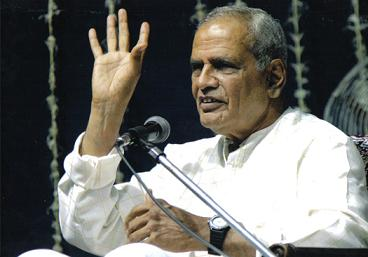
At the age of fifty-two, after having perfectly fulfilled all his family responsibilities, he retired from his profession, which was a source of worldly progress, and dedicated the rest of his life to the divine work of social enlightenment. He now devotes himself to the sacred task of sharing this acquired nectar of divine wisdom with everyone through his loving discourses and profound writings. His divine mission to bring the Vedanta philosophy—taught by the great Adi Shankaracharya to reveal the pure path of spiritual truth—into the hearts of the people using a modern, understandable language continues unceasingly to this very day.
He meticulously adheres to this directive of Shri Samarth: शाहाणे करावें जन । पतित करावे पावन । सृष्टीमधें भगवद्भजन । वाढवावें ॥ (‘Make people wise, uplift the downtrodden, and expand the devotion of God across the world’). His discourses are scripturally rigorous and logically sound, yet deeply nourishing to devotion and imbued with faith. To hear him personally expound upon the most subtle spiritual principles—offering seekers coherent interpretations born of his profound study, contemplation, and reflection—is truly a spiritual feast. His speech is mature, profound, and full of grace. It is enriched with profound joy (Prasannata) and an uncompromising clarity of truth (Spashtavaktepana). He has never allowed any room for the narrowness of caste, religion, creed, or sect. He expertly explains how the literature of the saints possesses a perfect foundation in Vedanta, and guides seekers on how to study it with that perspective. He removes the misconceptions in people’s minds regarding the words ‘Adhyatma’ (spirituality) and ‘Paramartha’ (highest truth), clearly establishing the nature of the pure spiritual path. He reveals the secret of how to cultivate a spiritual practice infused with devotion, action, knowledge, and meditation. He never abandons his central guiding principle: ‘शुद्ध विवेके परमेश्वर ओळखावा’ (‘Recognize the Supreme Lord through pure wisdom’). To achieve this awakening, he preaches not only in Marathi but also in Hindi and English.
For the noble cause of spiritual awakening, he undertook pilgrimages throughout India and also conducted tours abroad. He has delivered more than ten to twelve thousand discourses both within the country and abroad. He himself has never kept count of them, nor does he ever speak of it. He guides seekers through discourses and study circles in holy places like Shivtharghal, Sajjangad, and Pandharpur. Alongside these sacred sites, his discourses are continuously held in educational institutions, village temples, and various other venues. With the cooperation of many, he routinely conducts spiritual gatherings (satsangs), camps, and study circles. The seeker community often selects a non-dualistic (Advaita) text and organizes a five-to-six-day residential study camp, during which guidance is provided by P.P. Doctor Kaka and P.P. Mandatai Gandhe (Amravati). Special study classes are also organized for the youth. Through all this, numerous aspirants seeking ultimate salvation have been drawn to him. Through his tireless efforts, he continues his mission to build a beautiful spiritual community of discerning, knowledgeable devotees. The tiny, tender vine that started with just a handful of seekers is now reaching up to embrace the sky. A spiritual family of thousands of seekers surrounds him today, and from this very garden, so many wonderful speakers, writers, and devoted practitioners have blossomed.
By first practicing selfless action, devotion, knowledge, and detachment himself, P.P. Doctor Kaka explained these principles to the people and taught them how to embody them in daily life. He teaches that Liberation (Moksha) is not a transaction on credit to be claimed only after death, but a festival of uninterrupted joy to be experienced in this very life. The true joy of liberation lies in ‘living joyfully and, when the time comes, joyfully leaving the body and the world’—and exactly what must be done to attain that joy, fulfillment, and satisfaction becomes profoundly clear through his teachings. He firmly establishes the principle that spiritual practice (Sadhana) is not something to be done for a specific time during the day, but is rather a complete way of life. He encourages seekers by showing them how to achieve liberation while remaining within worldly life—amidst their existing circumstances and relationships. He imparts a way of life grounded in maxims such as, ‘Thought and spiritual discrimination (Viveka) are the true tools of spirituality,’ and ‘Restless activity should gradually decrease—meaning the mode of passion (Rajoguna) must be reduced and the mode of goodness (Sattvaguna) increased, for Sattvaguna is the very foundation of spiritual practice.’
A multitude of definitions for spiritual practice emerge directly from his discourses. For example: ‘Spiritual practice is the process of shedding the conditioning of the mind,’ ‘It is the continuous, earnest effort to integrate spirituality directly into life rather than keeping it separate,’ and ‘It is the act of restraining the mind from worldly distractions that obstruct the spiritual path.’ His focus is always on how every seeker can progress further from where they currently are, according to their capacity. His attention is uniquely focused on each individual soul based on how genuine and deep their spiritual yearning truly is. In guiding them forward on this path, he has never bothered about his own hardships, time, or money. He has never insisted on a specific mode of transport when traveling; to him, walking, taking a rickshaw, a scooter, a motorcar, or an airplane are all exactly the same.
He is an authoritative commentator on texts like Dasabodh, Dnyaneshwari, Viveksindhu, the Upanishads, Brahmasutras, and the Gita. Samarth Ramadas has outlined the benchmark of a supreme text: जेणें परमार्थ वाढे । अंगी अनुताप चढे । भक्तीसाधन आवडे । त्या नांव ग्रंथ ॥ (‘A true scripture is one that deepens your spiritual life, sparks inner transformation, and makes you genuinely fall in love with devotion’ – Dasabodh 7-9-30). Dr. Deshmukh’s complete body of literature flawlessly measures up to this benchmark. His writing stems from a deep motivation to foster pure spirituality and to elucidate the core doctrines and pristine wisdom.
Dr. Kaka instructs seekers on how to conduct a ‘mindful study’ of any scripture, skillfully enriching them with profound wisdom. He delegates responsibilities only after carefully assessing each individual’s spiritual aptitude (Adhikar). He dedicates himself to the welfare of the masses and inspires his disciples to carry forward this noble work of community building (Lokasangraha). It is crucial to recognize how his work perfectly mirrors this verse from the Dasbodh: महंतें महंत करावे । युक्तीबुद्धीनें भरावे । जाणते करूनी विखरावे । नाना देसीं ॥ (‘An effective leader trains other leaders, equips them with wisdom, and sends them out to enlighten the world’ – Das. 11-10-25). He has been diligently carrying out all the duties of a true spiritual leader envisioned by Samarth Ramdas. His state of being perfectly reflects that of Shri Tukaram: ‘आता उरलो उपकारापुरता ।’ (‘Now I exist only to benefit others.’). Yet, he continuously engages in study, learning, meditation, contemplation, and the spiritual awakening of the masses, recognizing them all as divine work. Just as Shankaracharya, Dnyandev, Tukaram, and Ramdas are deeply dear to him, he has also earnestly studied the philosophies of science-oriented Western thinkers like Freud, Schopenhauer, Berkeley, and Heisenberg. The modern Western perspectives on the mind and intellect, alongside the ancient conclusions drawn from our Vedas and Upanishads, flow effortlessly into his discourses. He passionately advocates for a lifestyle that leads to spiritual freedom (Moksha), constantly emphasizing the absolute necessity of contemplating the Self, the Divine, the Ultimate Truth, and the Guru.
Along with all the above work, he served as the co-organizer of the monumental initiative, ‘Study of Dasbodh by Correspondence.’ He crafted the examination papers for its third level, called ‘Prabodh.’ He worked for many years as a respected trustee of the Shri Samarth Seva Mandal, Sajjangad. In due course, he authored many magnificent and uplifting books like Dasbodh Chintanika, Atmaram (Vivaran), Dasbodh – Sartha Va Satik, and Panchadashi Bhavadarshan. The quarterly journal ‘Bhaktiyoga’ was inaugurated by his spiritual fraternity. Through this periodical, his literary contributions and the resolution of seekers’ doubts continue to flourish. (Inspired by this journal, numerous seekers have even begun to independently reflect and write). A highly systematic structuring of the subject matter, combined with bold and distinct clarity of thought, are his recognized hallmarks. His central insistence—that both the teachings of scriptures and the daily events of life must be transformed into living spiritual practice—is a defining characteristic of his discourses and writings. His book संसारसागरातील गीतादीपस्तंभ (The Gita as a Lighthouse in the Ocean of Worldly Life) is an ideal example of this perspective. He constantly teaches that the core principles, teachings, and ultimate goal are one and the same across various non-dualistic traditions like the Warkari, Samarth, Datta, Nath, and Chinmaya lineages. He points out that the superficial differences seen among them are merely due to the varying spiritual practices and methods of worship prevalent in those respective traditions. By illuminating this truth, he constantly strives to eliminate the dogmatic divides between different schools of thought.
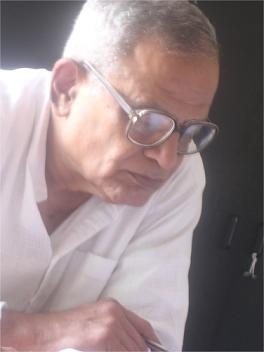
It is solely due to this spiritual grandeur that the presidency of the All India Marathi Sant Sahitya Sammelan in Ujjain naturally came to him. In 2003, the Yadav Math of Kolhapur respectfully honored him with the title ‘Dnyanbhushan.’ The scholarly ‘Shri Mukundacharya’ award, sponsored by Shri Nilangekar for exemplary literary creation in the spiritual realm, was conferred upon his book Panchadashi Bhavadarshan in February 2006 by the Eknath Sanshodhan Mandir of Aurangabad. The Narsobachi Wadi Sansthan has felicitated him in a similar manner, and he is adorned with numerous other such awards and honors.
In this way, Doctor Kaka, who has dedicated his body, mind, and wealth to the divine cause, does not merely preach the essence and philosophy of the Shrutis and Smritis. Rather, it is as if that very philosophy has taken a physical form, manifesting before us through his very being: परी श्रुतिस्मृतींचे अर्थ । जे आपण होऊनी मूर्त । अनुष्ठानें जगा देंत । वडील जे हे ॥ (‘Like the revered elders who become the living embodiment of the scriptures, demonstrating its practice to the world’ – Dnya. 17-86). Those who witness the divine presence, listen to the enlightening words, and receive the grace of such a scripturally wise, God-realized, compassionate, and joyful great soul are all truly blessed.
His Work in Brief:
- Spreading pure spirituality to the general public.
- Authoring Vedantic texts and writing regular spiritual columns in periodicals.
- Dispelling deep-rooted societal misconceptions about spirituality.
- Training numerous spiritual orators and authors to share the science of spirituality, saintly wisdom, and spiritual practice with the world.
- Leading genuine aspirants to their ultimate goal and illuminating the path of progress for all seekers.
- Unifying various Advaita traditions by removing superficial sectarian differences.
- Demonstrating true spiritual discipline, dispassion, and detachment through his own pristine conduct.
- Writing over thirty deeply philosophical Vedantic books.
- Delivering more than 12,000 spiritual discourses across various locations.
- Traveling extensively throughout India and abroad to guide a globally dispersed community of seekers.
- Contributing prolifically to spiritual journals such as Jeevan Vikas, Sajjangad, Prasad, Bhaktiyoga, and Pandhari Sandesh.
- Honored with numerous awards and citations for his contributions to spirituality.
It is solely due to this spiritual grandeur that the prestigious presidency of the All India Marathi Sant Sahitya Sammelan in Ujjain was naturally bestowed upon him. In 2003, the Yadav Math of Kolhapur respectfully honored him with the title 'Dnyanbhushan'. The scholarly award 'Shri Mukundacharya', sponsored by Shri Nilangekar for exemplary literary creation in the spiritual realm, was awarded to his book "पंचदशी भावदर्शन" in February 2006 by the Eknath Sanshodhan Mandir of Aurangabad. The Narsobachi Wadi (Narasimhawadi) Sansthan has also felicitated him in a similar manner. He is adorned with many other such awards and honors. In this way, Doctor Kaka, who has dedicated his body, mind, and wealth to the divine cause, does not merely preach the essence and philosophy of the Shrutis and Smritis. Rather, it is as if that very philosophy has taken a physical form and manifested before us through his very being: परी श्रुतिस्मृतींचे अर्थ । जे आपण होऊनी मूर्त । अनुष्ठानें जगा देंत । वडील जे हे ॥ "Like the revered elders who become the living embodiment of the scriptures, demonstrating its practice to the world" (ज्ञा. १७-८६). Those who witness the presence, listen to the enlightening words, and receive the grace of such a scripturally wise, God-realized, compassionate, and joyful great soul are all truly blessed.
His Work in Brief:
- Spreading pure spirituality to the general public.
- Publishing Vedantic texts and regular spiritual columns in periodicals.
- Dispelling societal myths about spirituality.
- Training numerous preachers and authors to globally share spiritual science, saintly wisdom, and daily practices.
- Guiding all spiritual seekers toward their ultimate liberation.
- Unifying various Advaita traditions by removing superficial sectarian differences.
- Demonstrating true spiritual discipline, dispassion, and detachment through his own pristine conduct.
- Writing over 30 deeply philosophical Vedantic books.
- Conducting more than 12,000 spiritual discourses.
- Traveling vastly across India and the globe to guide international devotees.
- Contributing prolifically to spiritual magazines like Jeevan Vikas, Sajjangad, Prasad, Bhaktiyoga, and Pandhari Sandesh.
- Honored with countless awards and citations.